In the modern scientific world, the authority of a publication is determined not only by the quality of the research conducted, but also by its citation. One of the global abstract databases is Web of Science, a prestigious scientometric platform that hosts millions of scientific publications. In this article, we will look at what major citation indices Web of Science includes and why they are important for scientists.
What is Web of Science?
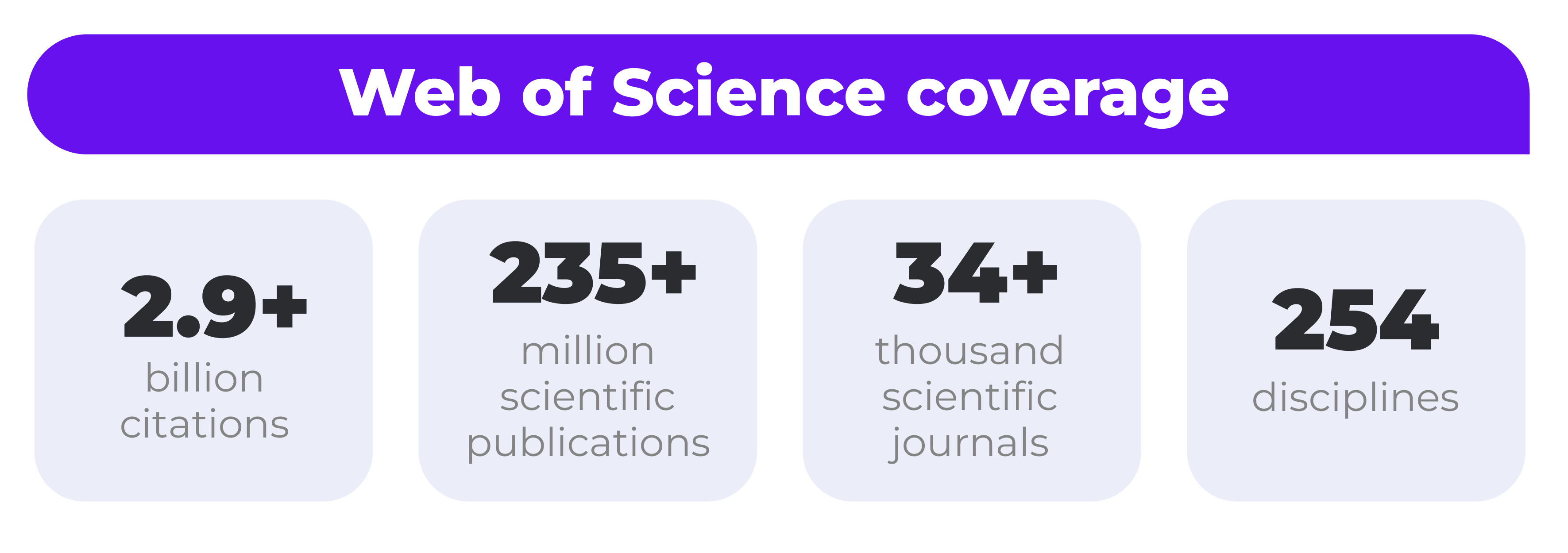
Web of Science (WoS) is a scientific metrics platform developed by Clarivate Analytics that combines several databases with millions of scientific publications. WoS allows scientists to analyse the links between scientific studies, determine their level of impact and assess the scientific importance of the journals in which they are published. The database covers a wide range of scientific disciplines, including natural sciences, technology, engineering, social sciences, humanities and medicine.
Web of Science Core Citation Indices
WoS – Web of Science Core Collection – consists of four key citation indices.
1. Science Citation Index-Expanded (SCIE) – natural, exact and technical sciences
SCIE is an expanded version of the original Science Citation Index, developed in the 1960s by Eugene Garfield. Today, SCIE includes more than 9,200 highly rated scientific journals in the natural and technical sciences.
Science Citation Index-Expanded is one of the most global indices and covers more than 182 subject categories. SCIE journals are considered prestigious for publishing research and receive large coverage.
2. Social Sciences Citation Index (SSCI) – social and behavioural sciences
SSCI is a specialised index of the Web of Science Core Collection, which includes peer-reviewed journals in the social sciences. Social Sciences Citation Index indexes more than 3.5 thousand authoritative journals from 47 subject categories. This index is suitable for researchers working in such fields as psychology, economics, law, education, sociology and other areas of humanities and social profile.
3. Arts & Humanities Citation Index (AHCI) – arts and humanities
AHCI is a WoS citation index of over 1,800 authoritative journals in the arts and humanities from more than 25 subject categories. The collection covers publications from 1975 to the present. Although AHCI journals have no impact factor (JIF), the index plays an important role in raising the academic status of authors whose work is related to philosophy, literature, art history and other disciplines in the field.
4. Emerging Sources Citation Index (ESCI) – all disciplines
ESCI is an index of new and emerging journals that are still being screened for inclusion in SCIE or SSCI. ESCI scientific journals have no impact factor, but are indexed in Web of Science. The publications included in the ESCI index have the prospect of being included in the more prestigious SCIE, SSCI or AHCI.
In general, publications in journals indexed in ESCI are considered by educational institutions, scientific organisations and grantors at the same level as publications in other major Web of Science indexes.
Why do I need to publish a scientific article in Web of Science?
- scientific recognition: journals indexed in WoS undergo a rigorous peer-review process. Publication in such a journal indicates the high quality and scientific novelty of the research
- international visibility: articles published in WoS journals become visible to the global scientific community, which increases the chances of receiving proposals for international co-operation and participation in large-scale international projects.
- increased citation and Hirsch index: publications in WoS influence the formation of scientometric indicators such as citation index and h-index.
- obtaining research grants: many sponsoring organisations and foundations give preference to applicants who have publications in WoS
- awarding scientific degrees and scientific titles: publication of scientific articles in Web of Science journals is one of the requirements for the defence of a thesis and awarding scientific titles.
Publishing in Web of Science can be a daunting process for both novice researchers and experienced scientists. Scientific Publications has been helping scientists from all over the world for more than 9 years to successfully complete all stages of publishing a scientific article in WoS in highly ranked journals. Leave a request in the form below to get a detailed consultation from our expert.